ErmRoom · Public & national libraries
Room and equipment booking for public libraries with many branches and one calendar
ErmRoom gives a public library system one real-time calendar for every bookable room, desk and piece of equipment across its branches. Residents book online and self-serve, staff approve where policy requires it, recurring community groups keep their slots, and utilisation reports show the council which spaces earn their floor area.
What breaks when every branch runs its own bookings
-
Each branch keeps a different diary
One branch uses a paper diary, another a shared mailbox, a third a spreadsheet. A resident who wants any room on Thursday evening has to phone three desks. One calendar across all branches turns that into a single search.
-
Community groups block rooms they no longer use
A weekly slot booked in January is still held in November after the group has folded. Recurring reservations with an end date and a no-show rule release the space automatically instead of relying on someone to notice.
-
Staff time goes on the booking, not the visitor
Taking a booking by phone, checking the diary, confirming by email and reminding the day before is fifteen minutes of desk time per reservation. Self-service booking with automatic confirmations and reminders gives that time back.
-
The council asks how the rooms are used and nobody knows
When a library review asks for utilisation by branch, room and time of day, a paper diary has no answer. Booking data with utilisation analytics answers in the format the review needs.
Data protection: GDPR and UK GDPR
- Controller and processor
- For patron, staff and user records your institution is the controller and ERMLib the processor. The subscription agreement contains the processor terms Article 28 requires: purpose, instructions, sub-processors, deletion at the end of the contract.
- Rights requests
- Access, rectification, erasure and portability requests are answered from the platform: records are searchable per person and exportable in standard formats, so the one-month deadline is workable.
- Retention and deletion
- Retention periods are agreed per record type in the processing agreement. At the end of a subscription you keep read-only access for 90 days to export everything; after that the data is deleted.
- Access and accountability
- Staff sign in through your identity provider (LDAP, SAML 2.0, Shibboleth, OIDC), access is role-based, and changes to licences and records are attributable to a named account.
- International transfers
- The hosting region is stated in your agreement. Where data leaves the UK or the EEA, the transfer relies on an adequacy decision or standard contractual clauses, and that basis is documented for your records.
- Children's accounts
- Junior memberships are children's data: notices must be written for the age group and, in the UK, the ICO Children's code applies to any online service a child can use. Configure notices and consent flows for junior memberships accordingly.
This section explains how the platform supports your obligations. It is not legal advice; your data protection officer decides what applies to your institution.
Why ErmRoom suits a public library service
Public library rooms serve very different users on the same day: a job-club at ten, a toddler group at eleven, a council surgery at two, a chess club in the evening. ErmRoom treats each room as a resource with its own rules (opening hours, minimum and maximum duration, who may book, whether staff approval is needed) so a study pod can be walk-up while the large hall stays approval-only for licensed events.
Equipment is handled the same way as rooms. Projectors, laptops, hearing loops and the 3D printer in the makerspace are bookable items with their own availability, and a room booking can include the equipment it needs, which ends the morning hunt for the one working adapter.
Because booking data is structured, reporting is simple. Utilisation by branch, room, hour and audience type is available to library management and to the council's asset team, exported to PDF or Excel for the annual review. And because ErmRoom is part of the same platform as the ERM module and ErmSite, a resident books the room on the library website with the same account they use for everything else.
How a multi-branch rollout runs
-
1
Discovery
We list every bookable space and item across branches, capture each one's rules and opening hours, and agree which existing recurring bookings carry over on day one.
-
2
Setup and migration
Rooms, equipment, rules and recurring reservations are loaded, the booking pages are placed on your website, and the approval workflows are tested with branch managers before residents see them.
-
3
Go-live and support
Branch staff are trained on approvals, walk-ups and reporting, residents book from the first day, and support continues under the agreed service level. Setup, training and maintenance are included.
Questions Public & national libraries ask
Can residents book without a library card?
That is a policy choice, not a technical limit. Rooms can be set to accept bookings from any registered account, from library members only, or from staff only, and a room can require approval before a booking is confirmed. Many services open study spaces to everyone and keep meeting rooms for members or community groups; ErmRoom supports each rule per room.
How are no-shows handled?
A booking can require check-in within a grace period you set; if nobody checks in, the slot is released and becomes available to walk-ups, and the no-show is recorded against the account. Recurring reservations can carry an end date and a no-show limit, so a community group that stops attending does not hold its slot indefinitely.
Can we charge for rooms or hire equipment?
Rooms and items can carry a price and a deposit rule, and bookings that need payment or a signed hire agreement can be held for staff approval before they are confirmed. Payment collection itself runs through your existing council or library payment provider; ErmRoom records the booking, its status and the approval trail.
Does it work across branches with different opening hours?
Yes. Each branch has its own opening hours, closure days and holiday calendar, and each room inherits them unless it has its own rules: a hall available for evening lets after the branch closes, for example. A resident searching for a room across the service only sees times that are genuinely available.
What reports does the council get?
Utilisation by branch, room, hour of day, day of week and booking type; no-show rates; and the share of bookings made online versus at the desk. Reports can be scheduled to library management and to the council's property or performance team, and exported to PDF, Excel or CSV in the format an annual review already uses.
How long does it take to set up across a whole library service?
The work is proportional to the number of rooms and rules, not the number of branches. A service with a few dozen bookable spaces is usually live within weeks once the room list and rules are agreed; the discovery step is where the time goes, because it is where each branch's informal conventions are written down for the first time.
Explore further
Public & national libraries
ErmRoom for other teams
From the updates

Case Study: Helsinki City Library Reimagines Patron Engagement
Helsinki City Library used ERMLib to build a patron engagement platform that lifted program attendance by 35% and changed how it connects with residents.
ERMLib Team 3 min read

Community Libraries Going Digital: Bridging the Access Gap
Small and community libraries are using digital tools to extend services beyond their walls, and the results are reshaping how people access information.
ERMLib Team 3 min read
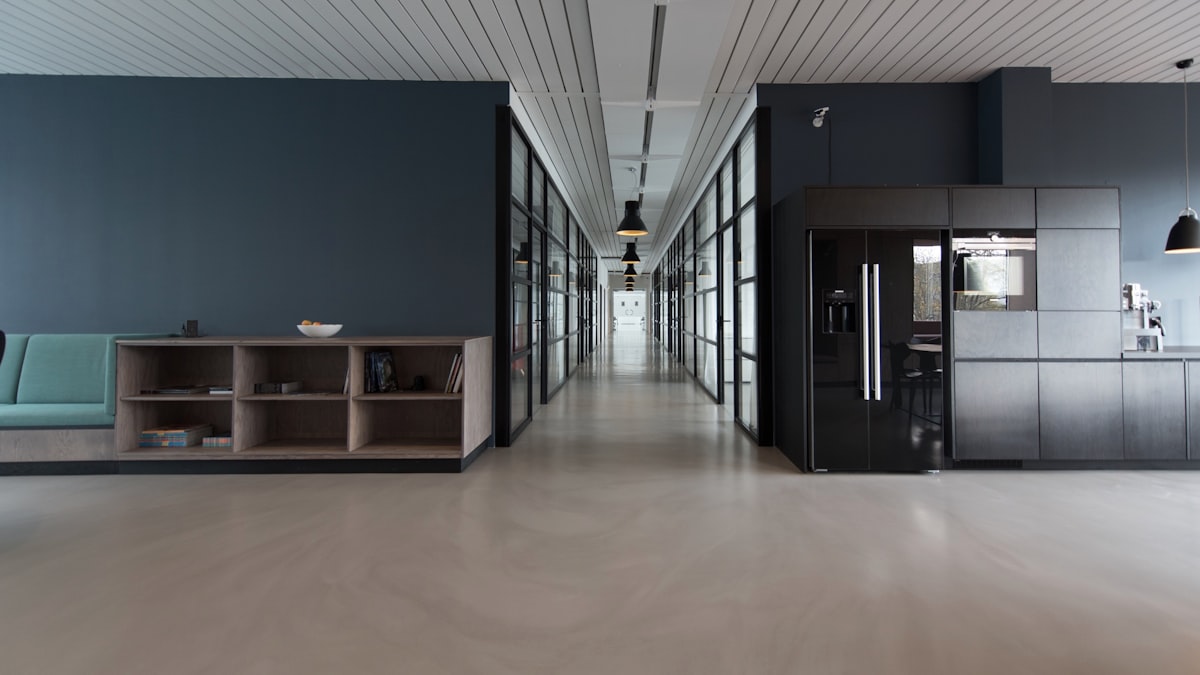
Optimizing Room Bookings: Getting More From Your Library Spaces
Practical strategies for managing study room and event space bookings, reducing no-shows, and using occupancy data to guide space planning decisions.
ERMLib Team 3 min read
How ERMLib compares
Side-by-side pages for the systems you are probably evaluating.
See ErmRoom on your own data
Tell us what Public & national libraries need to manage and we come back with a written proposal: scope, rollout and pricing for your institution.
Request a proposal